
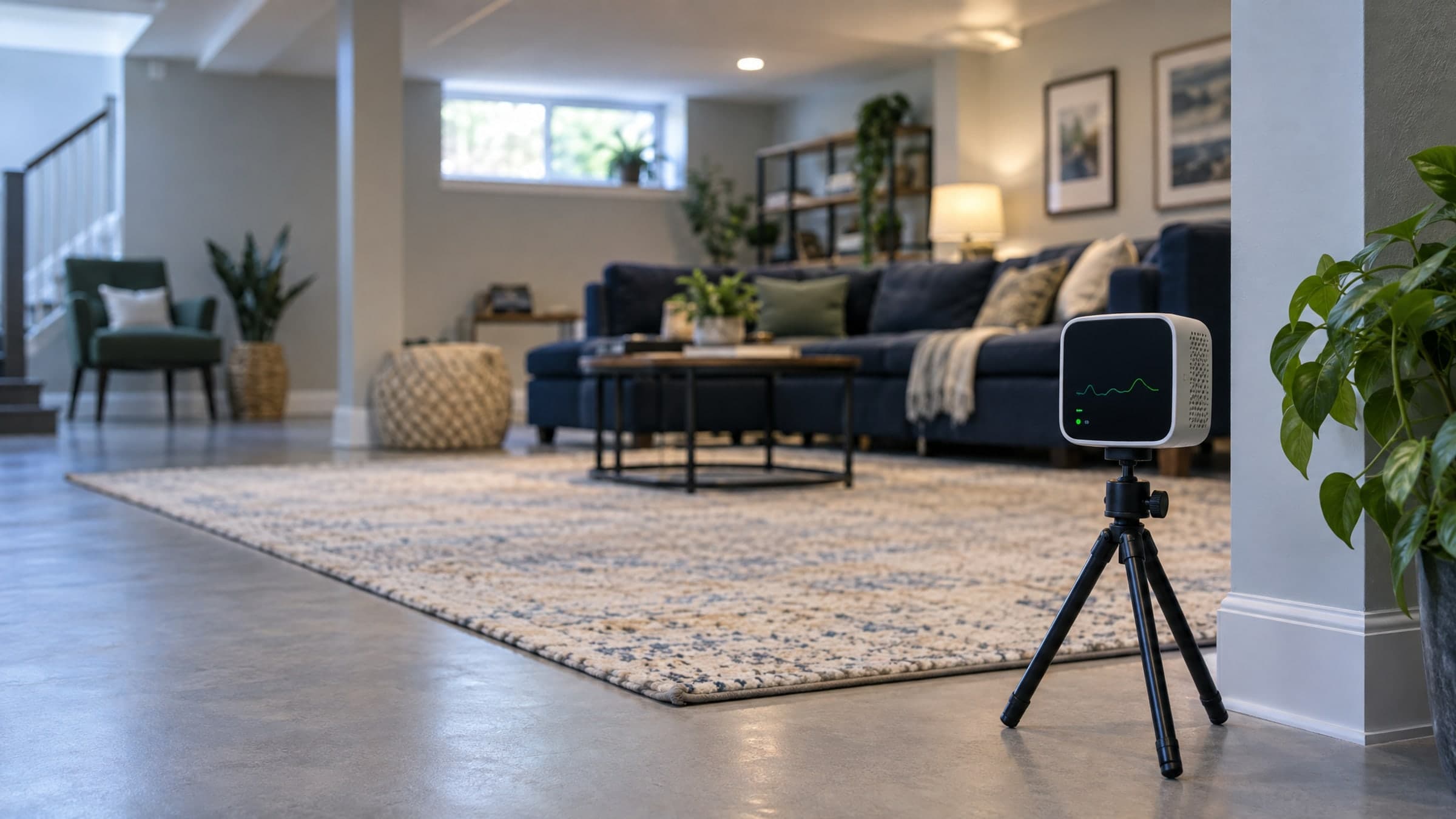
What is Radon Testing?
Radon testing measures the concentration of radon, a radioactive gas that naturally occurs from the breakdown of uranium in soil and rock. Because this invisible, odorless gas can enter homes through foundation cracks and openings — and is a leading cause of lung cancer — professional testing is essential for your home's safety.
Why Choose I Home Inspections?
Our certified radon measurement specialists use EPA-approved continuous radon monitors and follow strict testing protocols to ensure accurate results. We provide detailed analysis and interpretation of the findings, helping you understand your home's radon levels and the right next steps.
What We Inspect
Our comprehensive Radon Testing includes:
Testing Locations
- Lowest living areas
- Basements
- First-floor rooms
- Crawl spaces
Environmental Factors
- Air pressure variations
- Temperature changes
- Humidity levels
- Ventilation patterns
Our Inspection Process
- 01.
Initial Setup
- Test location selection
- Equipment placement
- Closed-house conditions
- 02.
Testing Period
- Minimum 48-hour testing
- Quality control checks
- 03.
Results & Analysis
- Mitigation recommendations
- Health risk assessment
Frequently asked questions
What radon level is considered high?
The EPA recommends fixing your home if radon is 4 pCi/L or higher, and considering mitigation between 2 and 4 pCi/L.
How long does a radon test take?
Our continuous monitors run for a minimum of 48 hours under closed-house conditions, then we analyze and explain the results.
Do newer homes need radon testing?
Yes. Any home can have elevated radon regardless of age, construction or neighborhood — testing is the only way to know.